Struggling after more than one antidepressant Learn the signs of Treatment Resistant Depression and how TMS can help in Atlanta and Decatur


Table of Contents
Treatment Resistant Depression in Atlanta Signs it is time to consider advanced care
If your mood stays low even after trying more than one antidepressant, you may be dealing with Treatment Resistant Depression. You are not failing. Your brain needs a different kind of help. Advanced options like TMS can offer a new path when standard care has not worked. The goal of this guide is to help you spot the signs that it is time to consider advanced care in Atlanta and Decatur, and to explain in clear words how TMS works and who it can help. Information on symptoms and treatment basics comes from trusted national sources. See the sources list at the end.
What Treatment Resistant Depression means
Many people try one or two medications and still feel stuck. Treatment Resistant Depression is the term used when depression does not improve enough after adequate trials of antidepressants. Adequate means you used the right dose for enough weeks and followed your plan with your clinician. If you did that and your symptoms still limit your life, you may have Treatment Resistant Depression. Trusted health agencies describe depression as a condition that affects mood, sleep, energy, focus, and daily life. They also note that many people need more than one type of care to feel better. This can include therapy, medication, and brain stimulation treatments such as TMS. (National Institute of Mental Health)
Signs your depression may be treatment resistant
Use these signs as a simple checklist. If several apply, it is reasonable to ask about advanced care.
You have tried at least one antidepressant at a proper dose and time but daily life is still hard
Side effects made it hard to stay on medications or to reach a helpful dose
Therapy alone has not eased symptoms enough
Your symptoms return soon after each new trial
You keep missing work, school, or family time due to low mood, low energy, or poor sleep
You have lost interest in most activities for weeks
You feel numb or hopeless most days
If you see yourself in this list, you are not alone. There are other options to explore.
Why advanced care can help
Advanced care looks beyond a one size fits all plan. It blends precise treatments with coaching and follow up. For many people with Treatment Resistant Depression, this includes TMS. TMS is a non drug treatment that activates brain circuits involved in mood. In simple words, it uses focused magnetic pulses on the scalp to gently stimulate the parts of the brain that regulate mood and attention. National health sources explain that brain stimulation therapies can play an important role when other treatments have not worked well enough. (National Institute of Mental Health)
What TMS is in clear terms
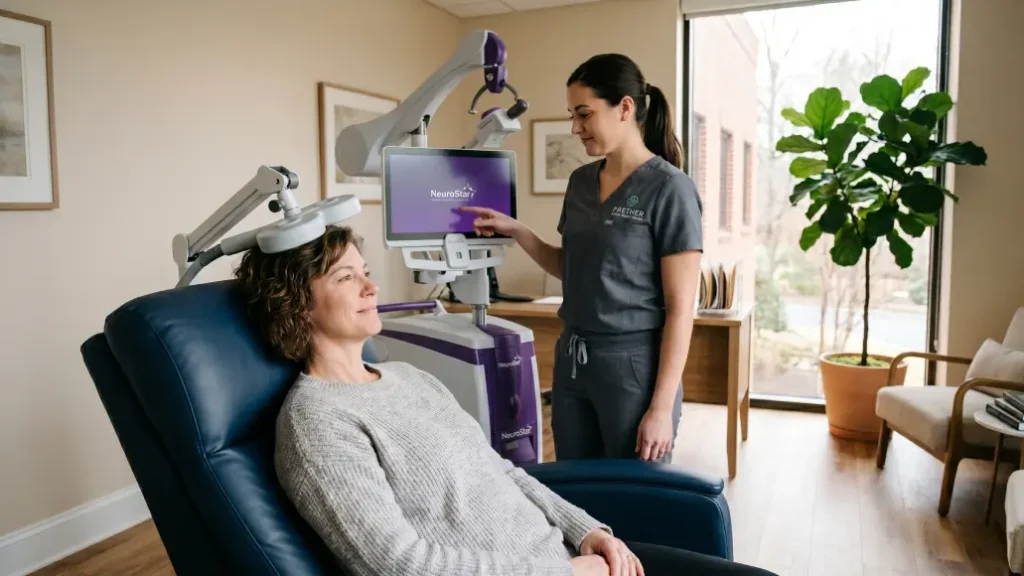
TMS stands for transcranial magnetic stimulation. A clinician positions a treatment coil on your head while you sit in a chair. The device sends short magnetic pulses to a key mood area in the brain. You stay awake. No anesthesia. Most people read, listen to music, or rest during a session. Sessions are brief on most modern systems. You can return to normal activities right after. TMS is cleared by the Food and Drug Administration for major depressive disorder when prior medications have not helped enough. (accessdata.fda.gov)
TMS advanced options for Treatment Resistant Depression
At Atlanta Spravato and TMS Center, we use NeuroStar TMS. NeuroStar is an FDA cleared system for depression in adults who have not improved with prior medication trials. In recent updates, NeuroStar also received clearance to be used as an add on treatment in adolescents ages 15 to 21. This is important for families who need safe, non drug options when standard care is not enough. (accessdata.fda.gov)
Here is what people often want to know about TMS
It targets the brain region linked to mood and focus
It does not require daily pills
It does not require anesthesia
The most common side effect is mild scalp discomfort that fades over time
Many people start to notice changes within several weeks
Results build over a full course that is set by your clinician
National mental health sources describe brain stimulation therapies like TMS as safe and helpful when guided by trained clinicians. (National Institute of Mental Health)
Who might be a good fit in Atlanta and Decatur
You may be a good candidate for TMS at Atlanta Spravato and TMS Center if
You have major depressive disorder and past medication trials did not help enough
You prefer a non drug option due to side effects or personal choice
You want a treatment that allows you to return to daily tasks right after each session
You can attend frequent sessions during the active phase of care
You are a teen or young adult with guidance from family and your clinician and meet safety and clinical criteria
Our clinic offers in person treatment in Decatur for TMS. We also offer telehealth in Georgia for evaluation and care planning. This means you can start with a virtual visit to review your history and goals, then come to the clinic for the TMS sessions.
Signs it is time to consider TMS now
Consider taking the next step if any of these are true
You have tried two or more medications and still struggle
You cannot tolerate side effects that block progress
Therapy has helped, but symptoms still get in the way
You need a plan that does not rely on daily pills
Your depression has lasted for many months with only short or no relief
You want a safe option with a strong track record in real world care
If this is you, asking for an advanced care consult is a smart and hopeful move.
What a first visit looks like
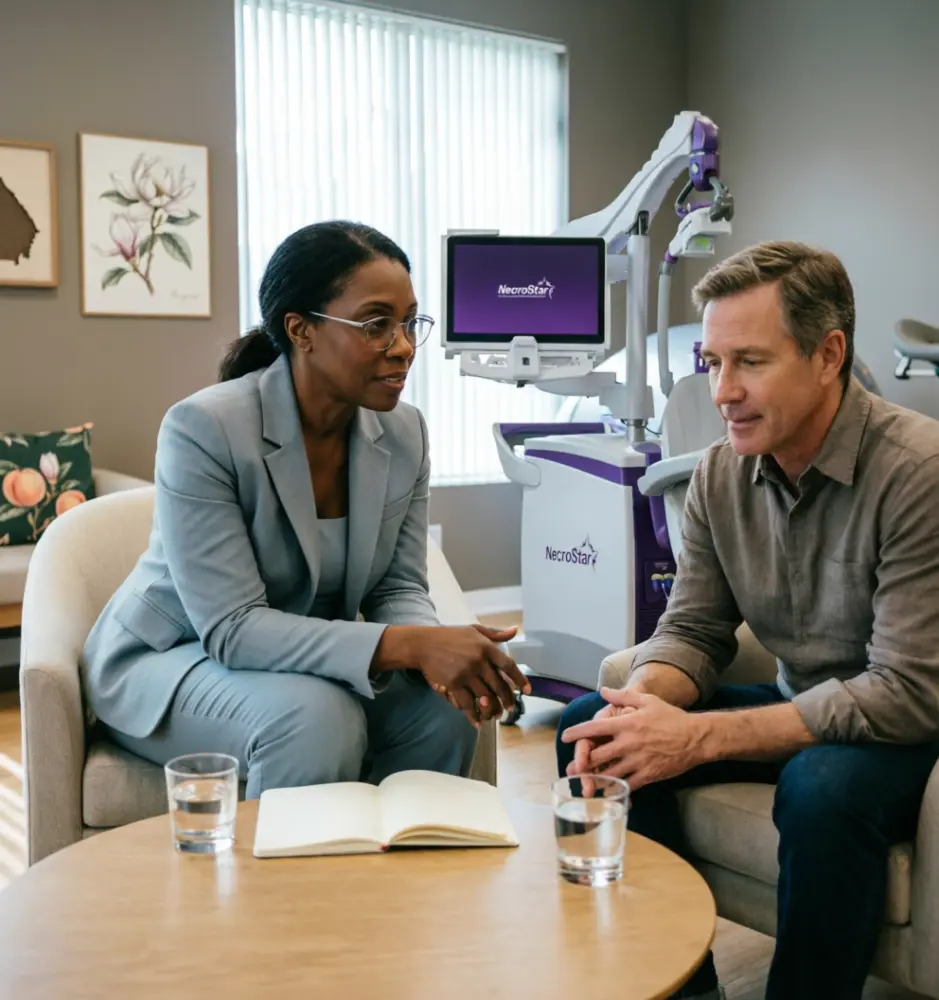
Your first step is a detailed evaluation. We gather medical and mental health history, past treatments, goals, and safety needs. We explain how TMS works and what a typical course looks like. We cover session length, number of visits, and expected changes over time. We also answer questions about daily routines such as driving or work. If we agree TMS is a fit, we plan your start date and your support system for the weeks ahead.
Telehealth can be used for evaluations across Georgia. This helps you begin fast and plan time off if needed. Treatments take place in our Decatur clinic so our team can guide you in person.
How TMS fits with other care
TMS works well as part of a larger plan. Many people stay in therapy during TMS. Some continue or adjust medications. Others taper off under close guidance. The key is a full plan that supports sleep, nutrition, activity, and social connection. You and your clinician decide what to keep and what to chang
Myths and facts in simple words
Myth TMS is the same as ECT
Fact These are different treatments. TMS uses magnetic pulses on the scalp while you stay awake. ECT uses controlled electrical currents under anesthesia. Both have roles in care. National sources describe TMS as noninvasive and well tolerated for depression when prior medications did not work well enough. (National Institute of Mental Health)
Myth TMS will change my personality
Fact The goal is to lift symptoms and restore your natural mood and function. You should still feel like yourself, only more stable.
Myth TMS is painful
Fact Most people describe a tapping feeling on the scalp during early sessions. This usually fades.
Myth TMS is not for teens
Fact NeuroStar has an FDA clearance for use as an add on treatment in people ages 15 to 21. Your care team will still follow strict safety steps and screening. (The Wall Street Journal)
What results can look like
People often report more energy, better sleep, and a return of interest in daily life. Friends and family may notice changes before you do. On our site you can read how TMS helped adults and teens in Atlanta move forward after years of trying standard care. Clinic pages also explain how we tailor sessions to your needs. (Atlanta Spravato & TMS Center)
Safety notes you should know
TMS is not right for everyone. People with certain metal implants or a history of seizures need careful screening. Your evaluation will cover these points. Authoritative health pages outline these limits and give a clear view of benefits and risks so you and your clinician can decide with confidence. (Mayo Clinic)
Local next steps in Atlanta and Decatur
If you live in Atlanta, Decatur, or nearby areas, you can start with a telehealth evaluation in Georgia and receive TMS treatment in our Decatur clinic. We welcome teens and adults who meet clinical criteria. We also coordinate with your therapist or primary care clinician as needed.
When to seek urgent help
If you ever have thoughts of harming yourself or others, seek help right away. In the United States you can call or text 988 for the Suicide and Crisis Lifeline. If you are outside the United States, use local emergency services.
How to move forward
If you are ready to explore advanced care for Treatment Resistant Depression, we are here to help. Book an evaluation, ask your questions, and learn if TMS is a good fit. If another path such as Spravato nasal esketamine or a combined plan makes more sense, we will guide you with the same care and clarity. Your story is still being written. You deserve a plan that works.
Helpful sources for you
Depression overview and symptoms National Institute of Mental Health. Brain stimulation therapies National Institute of Mental Health. FDA device summaries for NeuroStar TMS. FDA cleared update for adolescents reported by major news sources and manufacturer updates. These sources support the safety and use of TMS for major depressive disorder and help define Treatment Resistant Depression. (National Institute of Mental Health)