
TMS for Insomnia is not FDA cleared yet it may help sleep by lifting depression and calming overactive brain patterns. See how it works and what to expect in Atlanta and Decatur.

Table of Contents
TMS for Insomnia Can TMS Improve Sleep
If you live with insomnia you are not alone. Sleep trouble is very common in people with depression. Many report trouble falling asleep waking in the night or waking too early. When mood is low sleep often suffers and when sleep suffers mood can sink even more. This post explains TMS for Insomnia in clear language so you can see how a depression treatment may also support better sleep. (National Institute of Mental Health)
Quick basics about TMS
Transcranial Magnetic Stimulation uses focused magnetic pulses on the surface of the head. These pulses activate specific brain circuits that help regulate mood and thinking. TMS is non surgical and does not require anesthesia. You are awake and can return to normal activity after a session. TMS is an established option when depression has not improved enough with therapy or medicine. (National Institute of Mental Health)
What TMS is cleared to treat now
In the United States TMS devices have FDA clearance for major depressive disorder in adults and also for adolescents ages 15 to 21 with certain systems. TMS is also cleared for obsessive compulsive disorder with a deep TMS system and for short term smoking cessation in adults. TMS is not FDA cleared for primary insomnia. Clinics may consider TMS for sleep problems when depression is present but this is an off label decision that should follow an evaluation. (FDA Access Data)
Why sleep and mood are tied together
Depression and sleep have a strong two way link. During a depressive episode many people have insomnia. Some have early morning waking. Others sleep too much yet still feel tired. When sleep is poor daytime mood and focus drop. When mood is low it becomes harder to fall asleep and stay asleep. This loop makes recovery slower unless both mood and sleep are addressed. (National Institute of Mental Health)
What research says about TMS and sleep
TMS helps many people with treatment resistant depression. When depression improves sleep often improves as well. Studies also suggest TMS may directly improve insomnia symptoms in some patients even outside of depression care. Systematic reviews and randomized trials point to better sleep quality and reduced insomnia scores after courses of repetitive TMS. At the same time researchers note that larger high quality trials are still needed to define the best sites the best dose and who benefits most. (PubMed)
Key points from recent studies
- Meta analyses show TMS can reduce insomnia severity compared with sham and that benefits may last beyond treatment for some people. (PubMed)
- Trials in different groups including people with chronic insomnia and medical comorbidity report improved sleep quality with TMS compared with sham. Early pilot work also explores newer patterns such as theta burst. (PubMed)
- Evidence keeps growing but experts call for more multicenter work with objective sleep measures to guide routine care. (PubMed)
Who might ask about TMS when sleep is a main concern
You could bring up TMS with a clinician if
- You have depression with ongoing insomnia despite therapy and medicines
- Sleep problems make it hard to complete daily tasks or keep up at work or school
- You tried common sleep medicines and had side effects or limited benefit
- You want a non drug option to treat depression and support better sleep
A careful evaluation looks at your full sleep history and medical history including other sleep disorders such as sleep apnea. Your provider may also screen for anxiety PTSD or substance use since these can worsen sleep.
Care we provide in Atlanta and across Georgia
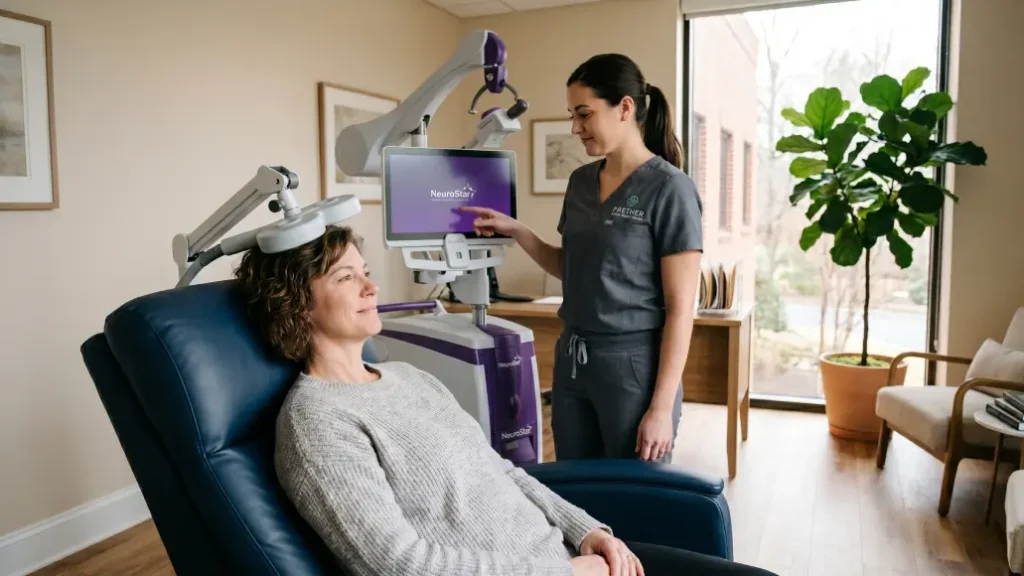
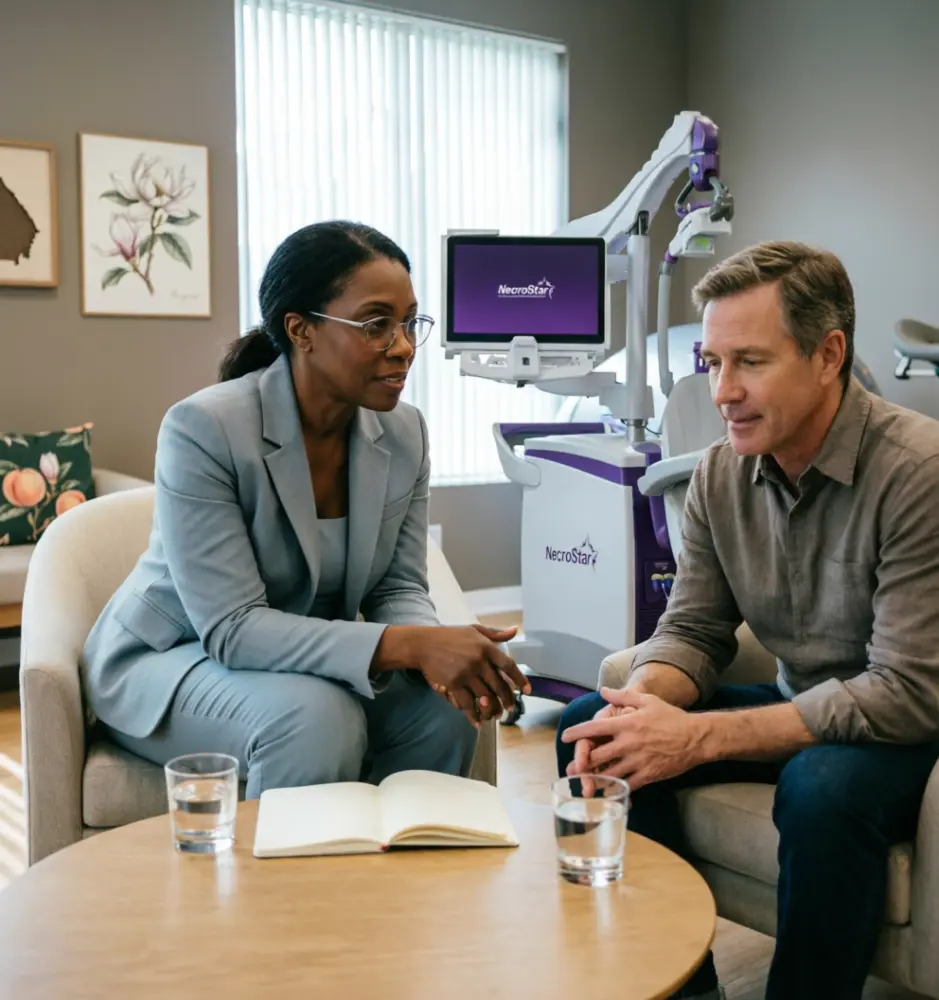
At Atlanta Spravato and TMS Center our team delivers NeuroStar TMS for depression and related symptoms. We start with a clinical evaluation. Telehealth evaluations are available across Georgia for screening and care planning. In person TMS sessions take place at our Atlanta and Decatur locations. Most people have short weekday sessions for several weeks followed by a taper plan if needed. Your plan is tailored to your goals and schedule.
What to expect from a TMS session
- You sit in a comfortable chair
- A trained TMS clinician places a treatment coil on your head over a mapped target
- You feel tapping on the scalp during brief trains of pulses
- Sessions typically last under 40 minutes though time varies by device and protocol
- You can drive yourself and return to regular activity after the session
Common side effects include scalp discomfort and mild headache that often fade over time. Serious side effects are rare. Your care team reviews safety and answers questions before treatment. (FDA Access Data)
Sleep steps to start now
While you explore TMS for Insomnia you can strengthen sleep with simple daily habits and with proven therapy for insomnia.
Sleep hygiene tips backed by the CDC
- Keep a regular sleep and wake time every day
- Make your bedroom quiet dark and cool
- Turn off screens at least 30 minutes before bed
- Avoid caffeine later in the day and avoid heavy meals and alcohol near bedtime
- Stay active during the day and choose balanced meals
These basics lower sleep pressure and help you get more deep sleep. (CDC)
CBT I is the first line treatment for chronic insomnia
Cognitive Behavioral Therapy for Insomnia is a structured program that retrains sleep patterns without relying on pills. Strong evidence shows CBT I improves time to fall asleep and total sleep time and keeps working after treatment ends. Your provider may combine CBT I with depression care and lifestyle steps. If you are not sure where to begin ask us for a referral as part of your plan. (healthquality.va.gov)
Bottom line on TMS for Insomnia
TMS is a well established treatment for depression and OCD. It is not FDA cleared for primary insomnia at this time. Even so many patients report better sleep as mood lifts and early research shows promise for direct sleep benefits in some people with insomnia. If insomnia and depression are both in play a combined plan often works best. That plan may include TMS for mood CBT I for sleep and healthy daily habits to support both. (U.S. Food and Drug Administration)
Ready to talk with a clinician in Georgia
We offer telehealth evaluations across Georgia for screening and treatment planning. We provide in person TMS in Atlanta and Decatur for treatment sessions. To learn more or to schedule a visit see our TMS therapy for insomnia page and request an appointment.