Traditional antidepressants don’t work for everyone. At Atlanta Spravato & TMS Center, we combine Transcranial Magnetic Stimulation (TMS) and Spravato (esketamine) to help patients with treatment-resistant depression. TMS restores brain activity over time, while Spravato provides rapid relief—together they offer a powerful path to recovery.


Table of Contents
For people living with treatment-resistant depression (TRD), traditional antidepressants often aren’t enough. That’s why more advanced therapies like Transcranial Magnetic Stimulation (TMS) and Sparavato (esketamine) have become breakthrough options in recent years.
At Atlanta Sparavato & TMS Center, we specialize in combining these treatments for patients who have tried multiple medications with little success. But many new patients ask:
“How exactly do TMS and Sparavato work—and how do they complement each other?”
Why Standard Treatments Sometimes Aren’t Enough
- One-third of patients with major depressive disorder (MDD) don’t respond to two or more antidepressants (National Institute of Mental Health).
- Medications take 4–6 weeks to show effects, and side effects may prevent continued use.
- Some patients need therapies that work faster or target the brain differently.
That’s where TMS and Sparavato come in.
What Is TMS Therapy?
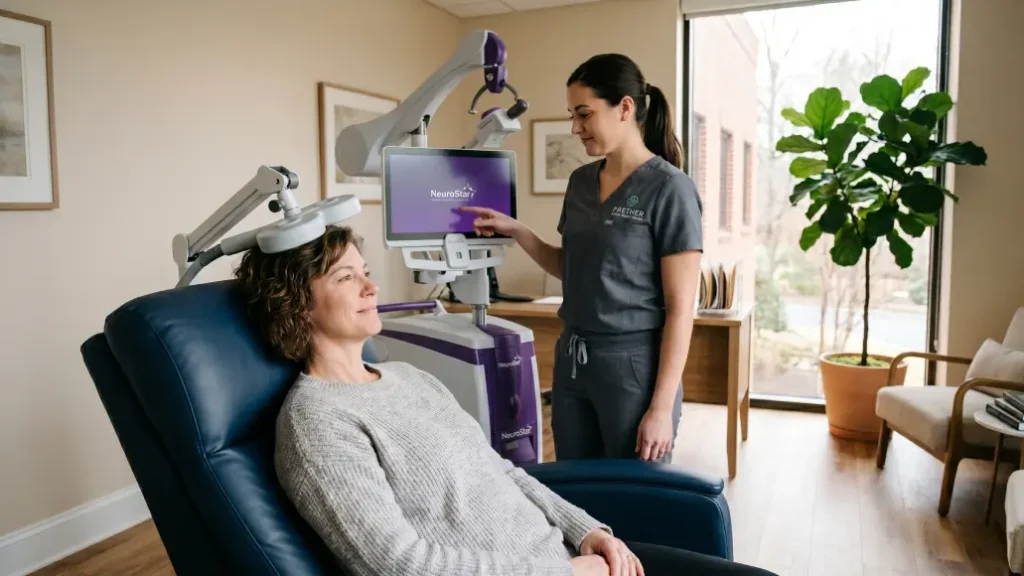
Transcranial Magnetic Stimulation (TMS) is a non-invasive, FDA-approved treatment for depression.
- How it works: A magnetic coil delivers pulses to the prefrontal cortex, the part of the brain responsible for mood regulation.
- What it does: Stimulates underactive brain cells and restores healthier neural activity.
- Treatment plan: Usually 20–30 sessions over 4–6 weeks.
- Benefits: Non-sedative, safe, and no downtime—patients can drive home or return to work right after a session.
The Mayo Clinic notes that TMS is particularly effective for patients who have not responded to antidepressants.
What Is Sparavato?
Sparavato is the brand name for esketamine, a nasal spray approved by the FDA in 2019 for treatment-resistant depression.
- How it works: Esketamine targets the brain’s glutamate system, unlike traditional antidepressants that focus on serotonin and norepinephrine.
- What it does: Creates new neural connections (synaptogenesis) and restores brain plasticity, leading to rapid improvements in mood.
- Treatment plan: Administered in-office under supervision, typically twice weekly for 4 weeks, then tapered.
- Benefits: Relief can be felt within hours to days, making it one of the fastest-acting depression treatments.
The FDA emphasizes that Sparavato must be used under strict supervision due to its dissociative effects.
How TMS and Sparavato Work Together
At Atlanta Sparavato & TMS Center, we often recommend combining these therapies for maximum results.
1. Different Pathways, Stronger Outcomes
- TMS targets brain activity and connectivity.
- Sparavato works on the glutamate system and synaptic growth.
- Together, they address depression from multiple angles.
2. Fast Relief + Lasting Results
- Sparavato provides rapid symptom relief within hours.
- TMS builds long-term stability over weeks.
3. Hope for Resistant Cases
For patients who haven’t responded to antidepressants, using both treatments increases the chance of remission.
A 2020 study in The Journal of Affective Disorders found that patients receiving combination neuromodulation and esketamine therapies experienced higher response rates compared to either treatment alone.
What to Expect From TMS in Atlanta
- Session Length: 20–40 minutes (no sedation).
- Sensation: Clicking sounds, tapping on the scalp.
- Side Effects: Mild headache or scalp tingling (usually temporary).
- Recovery: Immediate return to daily activities.
What to Expect From Sparavato in Atlanta
- Administration: Nasal spray under clinical supervision.
- Observation: You’ll rest for 2 hours after each session while staff monitor you.
- Side Effects: Dissociation, dizziness, nausea (usually fade within hours).
- Aftercare: You’ll need a ride home after sessions.
Benefits of Combining TMS and Sparavato
- Comprehensive Care – Attacks depression through multiple brain systems.
- Faster Relief – Patients often report improvements after the first few sessions.
- Sustained Recovery – TMS helps “lock in” the gains from Sparavato.
- Reduced Medication Reliance – Many patients reduce or stop long-term antidepressants.
Is This Combination Right for You?
You may benefit if:
- You’ve tried multiple antidepressants with little or no relief.
- You want faster improvement than medications alone provide.
- Depression significantly impacts your work, relationships, or quality of life.
- You’re seeking advanced options beyond traditional therapy and medication.
How Atlanta Sparavato & TMS Center Supports Patients
Our approach is comprehensive and personalized:
- Expert Evaluations – To confirm eligibility for TMS and Sparavato.
- FDA-Certified Treatments – Delivered safely and professionally.
- Integrated Care Plans – Medication management, therapy, and lifestyle support.
- Ongoing Monitoring – Tracking progress to fine-tune treatment.
We are committed to helping patients in Atlanta find real relief when standard treatments haven’t worked.
Conclusion
Depression can feel like an endless battle—but with advanced treatments like TMS and Sparavato, hope is real. TMS works by restoring healthy brain activity over time, while Sparavato provides rapid relief by reshaping brain chemistry. Together, they offer a powerful combination for people struggling with treatment-resistant depression.
At Atlanta Sparavato & TMS Center, we’re here to guide patients through every step, offering safe, effective, and compassionate care.
References:
- National Institute of Mental Health – Depression Basics
- Mayo Clinic – TMS Therapy
- FDA – Esketamine Approval
- Cleveland Clinic – TMS Overview
- Journal of Affective Disorders – Neuromodulation & Esketamine Studies