
Adolescent depression can disrupt every part of a teen’s life. Learn when TMS for adolescent depression becomes an option for teens 15 to 21 and how Atlanta Spravato and TMS Center supports families across Georgia with telehealth evaluations and in person TMS care.


Table of Contents
Adolescent depression is common and serious. It affects how a teen thinks, feels, and functions at school, at home, and with friends. In the United States, about one in five adolescents has had a major depressive episode in the past year. (nimh.nih.gov)
For many teens, talk therapy and medication bring real relief. But some teens continue to struggle even after trying several treatments. In recent years, TMS for adolescent depression has become a new option for teens ages 15 to 21 who still feel stuck. (PMC)
At Atlanta Spravato and TMS Center in Decatur near Atlanta, our team offers NeuroStar TMS for adolescent depression along with careful evaluation and follow up care. Families can start with a telehealth evaluation anywhere in Georgia, then receive in person TMS treatment in our Atlanta and Decatur area clinic. (Atlanta Spravato & TMS Center)
Understanding adolescent depression in older teens
Depression in teens 15 to 21 is more than feeling sad for a few days. It is a medical condition that can affect mood, energy, sleep, appetite, and motivation. The National Institute of Mental Health notes that depressed teens may feel sad, empty, or irritable most of the day and may lose interest in activities they used to enjoy. (nimh.nih.gov)
Common signs in older teens can include
- Ongoing sadness, tearfulness, or feeling numb
- Irritability, anger, or seeing others as critical or unfair
- Sleeping much more or much less than usual
- Big changes in appetite or weight
- Drop in grades or trouble focusing
- Pulling away from friends and family
- Feeling guilty, worthless, or like a burden
- Thoughts that life is not worth living
Depression can also show up in the body through headaches, stomach pain, or feeling tired all the time. It often occurs together with anxiety or other mental health conditions. (nimh.nih.gov)
If you notice these changes most days for at least two weeks, it is important to get a full evaluation with a mental health professional.
Usual treatments for adolescent depression
Most teens start with standard treatments before TMS for adolescent depression is considered. Evidence based options include
- Psychotherapy such as cognitive behavioral therapy or interpersonal therapy
- Antidepressant medications prescribed and monitored by a doctor
- Healthy sleep, exercise, and daily routines
- Support at school and at home
NIMH notes that depression in teens is often treated with talk therapy, medication, or a mix of both. (infocenter.nimh.nih.gov)
For many teens these steps work well. But some continue to have moderate to severe symptoms even after trying more than one medication and a good course of therapy. When this happens, providers may describe the depression as treatment resistant or hard to treat. This is often when families begin to ask about TMS.
What is TMS for adolescent depression
Transcranial Magnetic Stimulation is a noninvasive brain stimulation treatment. It uses a magnetic coil placed over the scalp to deliver short pulses that affect brain cells in areas involved in mood regulation. The United States Food and Drug Administration describes TMS as a procedure that uses magnetic fields to stimulate nerve cells in the brain. (U.S. Food and Drug Administration)
TMS does not require surgery. It does not use anesthesia. The teen is awake in a comfortable chair during each session.
How TMS works in the brain
In depression, certain brain networks involved in mood and thinking can become underactive or out of sync. TMS sends focused magnetic pulses to these regions. Over a series of sessions, this repeated stimulation can help reset activity patterns that are linked to low mood and negative thinking. (PMC)
For adolescents
- Treatment is carefully mapped to each teen’s brain anatomy
- The magnetic dose is adjusted to a safe and effective level
- The same area is treated over many days to build lasting change
What a typical TMS course looks like for teens
While details can vary by device and clinic, a common TMS plan for adolescent depression looks like this (Atlanta Spravato & TMS Center)
- Sessions on most weekdays for several weeks
- Each session lasting around 20 minutes
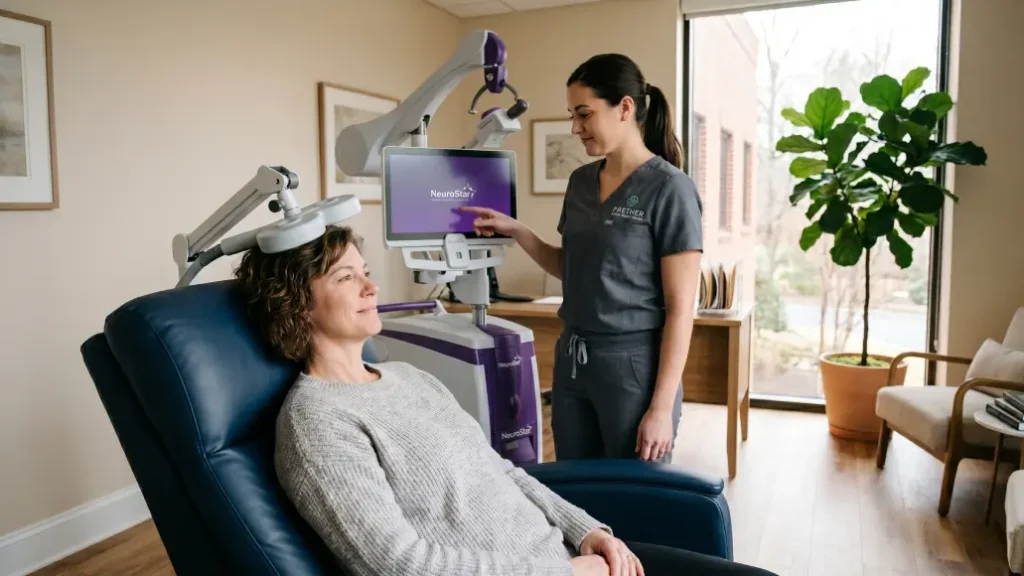
- The teen sits in a chair while a small coil rests against the head
- They may feel tapping on the scalp and hear clicking sounds
- After the session, they can go back to school or regular activities
There are no memory loss effects with TMS, and it is different from electroconvulsive therapy which uses an induced seizure with anesthesia. (U.S. Food and Drug Administration)
When doctors consider TMS for teens 15 to 21
TMS for adolescent depression is not a first step. It is usually considered when
- A teen has a clear diagnosis of major depressive disorder from a qualified clinician
- Symptoms remain moderate or severe despite one or more trials of antidepressant medication at adequate dose and duration
- The teen has tried evidence based psychotherapy and still struggles
- Medication side effects are hard to tolerate or make ongoing use difficult
- The family is committed to frequent clinic visits during the TMS course
Recent clearances from the United States Food and Drug Administration allow specific TMS systems to be used as an add on treatment for major depressive disorder in adolescents and young adults ages 15 to 21 who have not improved enough with antidepressant medications. (FDA Access Data)
TMS is always part of a broader care plan rather than a stand alone answer. Many teens continue therapy and medications while they receive TMS.
Clinical factors your provider will review
Before recommending TMS for adolescent depression, the care team will look at
- Full psychiatric history and current symptoms
- Past and current medications and side effects
- Medical history including any seizure risk
- Use of alcohol or drugs
- Family support and ability to attend regular sessions
- Safety concerns such as suicidal thoughts or self harm
In some cases, additional lab work or testing may be suggested to make sure TMS is a safe choice.
Who is not a good fit for TMS
TMS may not be appropriate for teens who
- Have metal implants in or near the head that are not safe with strong magnets
- Have a seizure disorder that is not well controlled
- Have certain unstable medical or psychiatric conditions
- Are unable to sit still for the length of a session
These decisions are made after a careful evaluation and discussion with the family.
Safety of TMS for adolescents and what research shows
Studies of TMS in adolescents suggest that it can be a safe and helpful option for many teens with depression who have not improved with standard treatments. (PMC)
Reported side effects are usually mild and can include
- Scalp discomfort or headache during or after treatment
- Facial muscle twitching while the coil is active
- Temporary tiredness after sessions
More serious side effects such as seizures are rare and occur in far less than one percent of patients when proper safety guidelines are followed. (Atlanta Spravato & TMS Center)
Because this treatment is still newer for adolescents, ongoing research is very important. NIMH and other groups continue to study teen depression and new treatment approaches so that care can become even more precise and effective. (nimh.nih.gov)
Families should always discuss risks and benefits with a qualified provider who has experience using TMS with teens.
TMS for adolescent depression at Atlanta Spravato and TMS Center
Atlanta Spravato and TMS Center offers NeuroStar TMS for adolescent depression in teens ages 15 to 21 who meet medical and safety criteria. NeuroStar was the first TMS system cleared by the United States Food and Drug Administration for adolescents with major depressive disorder as an add on to their current treatment plan. (Atlanta Spravato & TMS Center)
Our approach includes
- Comprehensive evaluation with a psychiatric provider
- Review of prior treatments and medical history
- Personalized TMS mapping and dosing
- Ongoing monitoring of mood, sleep, and daily functioning
- Close coordination with your current therapist or prescriber when possible
Telehealth evaluation across Georgia
For many families, taking the first step can feel hard. To make it easier, Atlanta Spravato and TMS Center offers telehealth visits for evaluations across the state of Georgia when clinically appropriate. During this secure video visit, you and your teen can
- Share your story and current concerns
- Review past treatments and records
- Ask detailed questions about TMS for adolescent depression
- Learn whether your teen may be a candidate for TMS or another service
If TMS seems like a good fit, the team will walk you through next steps such as insurance review and scheduling.
In person TMS treatment in Atlanta and Decatur
TMS sessions take place in person at our clinic in Decatur, serving teens and young adults from Atlanta, Decatur, and nearby communities. (Atlanta Spravato & TMS Center)
During treatment
- A trained TMS technician or nurse seats your teen in a treatment chair
- The NeuroStar coil is placed gently against the scalp in the mapped position
- The session runs under the supervision of the clinical team
- Afterward, your teen can return to school, work, or home activities
Our goal is to create a calm, structured setting where your teen feels safe and supported throughout their TMS journey.
Taking the next step if you are worried about your teen
If you are in Georgia and worried that your teen aged 15 to 21 may have depression that is not improving with current care, you do not have to figure it out alone.
Steps you can take now
- Talk with your teen and share that you want to help
- Reach out to your current pediatrician, therapist, or psychiatrist
- Learn more about TMS for adolescent depression and other options
- Contact Atlanta Spravato and TMS Center to ask about a telehealth evaluation for your teen in Georgia and in person TMS treatment in the Atlanta and Decatur area
If your teen talks about wanting to die or you feel they may act on suicidal thoughts, treat it as an emergency. Call your local emergency number or the 988 Suicide and Crisis Lifeline in the United States right away.
With the right support and a careful plan, many teens experience real relief and can return to school, friends, and plans for their future. TMS for adolescent depression is one more tool that can help some teens move forward when standard treatments have not been enough.