Curious about TMS for Anxiety. See what current research says, who benefits most, and how treatment works in Atlanta and Decatur.


Table of Contents
If you live with worry that will not let up, you may wonder about TMS for Anxiety. TMS is a gentle brain stimulation that does not involve surgery. It uses magnetic pulses to help reset brain circuits that affect mood and focus. People often ask if it can help anxiety. The short answer is yes for many people and the details matter. This guide explains what the evidence says and how to tell if you are a good fit for TMS for Anxiety in Atlanta and Decatur. The goal is to help you decide your next step with a clear mind. The National Institute of Mental Health explains that repetitive TMS uses brief magnetic pulses to stimulate a focused area of the brain and that it is a noninvasive clinic based therapy. (National Institute of Mental Health)
What TMS is in simple terms
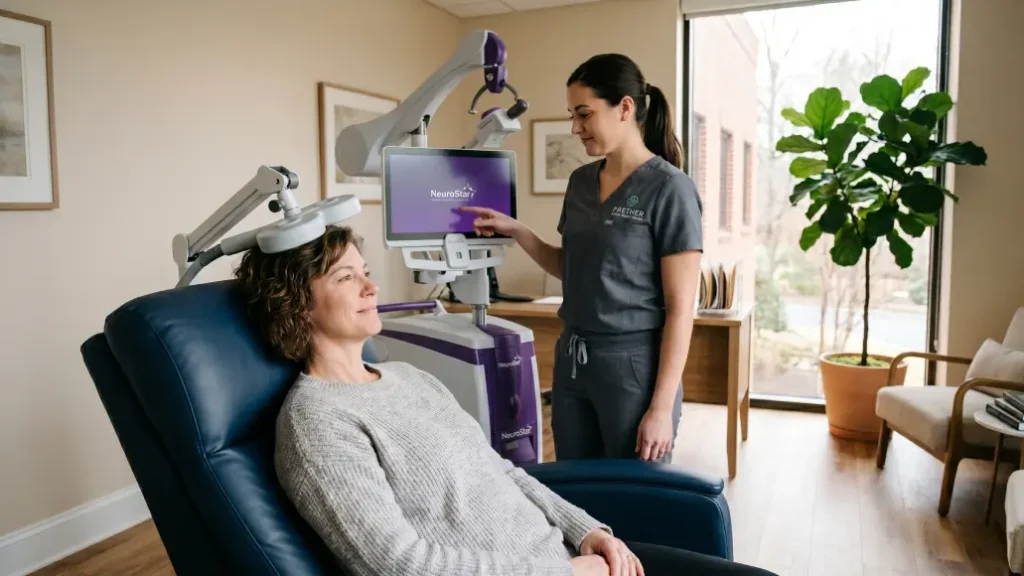
TMS stands for transcranial magnetic stimulation. A small coil sits on the scalp near the forehead. The coil sends quick magnetic pulses into a brain area that helps control mood and attention. You sit in a chair while awake. No anesthesia is used. After the session you can drive and return to your day. NIMH describes this as targeted magnetic stimulation that can change activity in nerve cells that influence emotions and thinking. (National Institute of Mental Health)
What the research says about TMS for Anxiety
Here is the state of the science in plain language.
First, TMS is widely used for depression. Several devices are cleared by the Food and Drug Administration for major depressive disorder and for obsessive compulsive disorder. Some systems are also cleared to reduce anxiety symptoms in people who have depression with anxiety features. In other words, anxious depression. That means insurers often cover TMS when depression is the main diagnosis. Coverage for primary anxiety disorders can vary. Recent reports note FDA clearances for anxious depression in specific TMS systems and show broader insurance adoption. (Psychiatric Times)
Second, for primary anxiety disorders such as generalized anxiety disorder the research base has grown fast in recent years. A 2022 meta analysis found that repetitive TMS reduced symptoms of generalized anxiety with a meaningful effect size. The authors also called for larger and more consistent trials. A 2025 meta analysis with trial sequential analysis reported that repetitive TMS for generalized anxiety was effective and safe and explored which settings may work best. A 2025 network review of brain stimulation methods suggested that low frequency repetitive TMS may be a strong option across anxiety conditions and related disorders. (OUP Academic)
Third, some anxiety conditions beyond generalized anxiety have early support. A review of randomized trials in panic disorder found benefit from repetitive TMS, with more research still needed to standardize targets and dose. Another systematic review looked at generalized anxiety and panic together and also found symptom gains. These results are promising for people who have not improved with medicine or therapy alone. (PMC)
What does all this mean for you. In clinic practice, many people who struggle with anxiety can improve with TMS. The most predictable coverage and strongest approvals are for depression with anxiety features. For primary anxiety without depression, evidence is positive and growing. A consult with a TMS expert can tailor the plan and also check on your insurance specifics in Georgia. (Psychiatric Times)
How a TMS session works
A typical plan includes a mapping visit and then short daily sessions on most weekdays for several weeks. Each session can last from about twenty to fifty minutes depending on the device and the protocol. You are awake, you can read or relax, and you can drive yourself home afterward. The most common side effects are mild scalp discomfort or headache during or after the session. Serious effects are rare. The Mayo Clinic notes that seizures are very rare and that careful screening helps reduce risk. (Mayo Clinic)
If you want to read more on the basics of TMS from a federal source, NIMH has an overview of brain stimulation that explains how the therapy affects brain circuits involved in mood and anxiety. (National Institute of Mental Health)
Who is a good fit for TMS for Anxiety
You may be a strong candidate if one or more of the following fits your story.
You have generalized anxiety with ongoing worry, muscle tension, and sleep trouble and you did not get enough relief from talk therapy, lifestyle changes, or medicine. Recent analyses suggest repetitive TMS can reduce anxiety scores in this group. (OUP Academic)
You have depression with anxiety features. FDA cleared systems include claims for anxious depression or for anxiety symptoms when depression is present. Coverage is more likely in this case. (Psychiatric Times)
You prefer a non drug option. TMS is not a medicine. It does not add systemic side effects like weight gain or sexual side effects. Many people choose it to avoid or reduce pills. Federal sources describe TMS as noninvasive and targeted. (National Institute of Mental Health)
You want to add TMS to therapy. Early evidence suggests that pairing TMS with cognitive or exposure therapy may enhance outcomes for some people. (MDPI)
You live in the Atlanta or Decatur area and want a clinic based treatment close to home. Our team offers NeuroStar TMS and a clear plan for what to expect before and during care on our site pages.
Who may not be a good fit
Safety is the first step. TMS is generally well tolerated, but certain conditions call for extra care.
Metal in or near the head such as aneurysm clips or cochlear implants can be a problem. Strong magnets are not safe around some implanted devices.
A history of seizures or a seizure disorder calls for medical review before treatment.
Some people with severe headaches or other active neurological issues need an extra safety review.
Pregnancy status should be shared with your clinician so you can review benefits and risks.
Mayo Clinic and NIMH list these safety notes and advise a careful screening visit before you start. (Mayo Clinic)
What to expect in our Atlanta and Decatur clinic
We use NeuroStar TMS and follow a friendly, step by step process so you feel informed and supported.
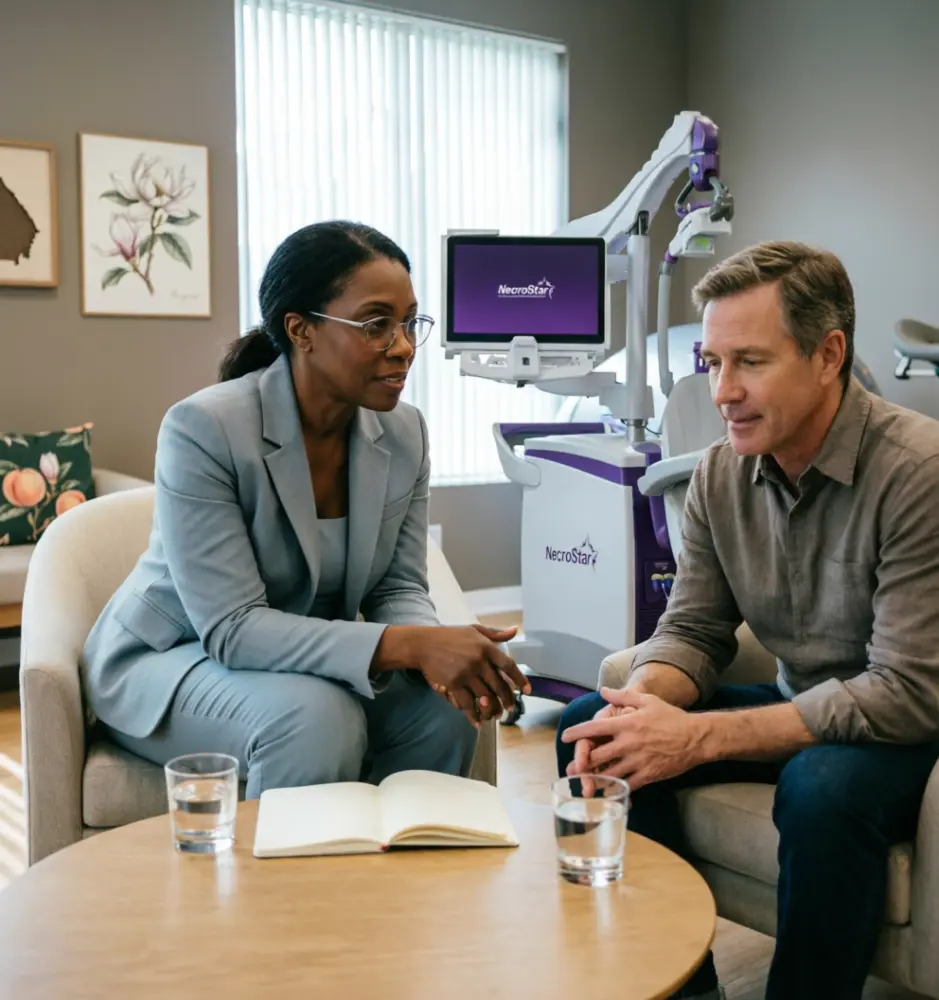
First contact and screening. Our team reviews your history, current symptoms, and past treatments. We also confirm safety for TMS and discuss goals. See our page About NeuroStar TMS to learn how the system targets brain areas that regulate mood and attention.
Mapping and first session. We locate your treatment target with gentle test pulses. You feel a tapping sensation under the coil. We set your dose based on your motor threshold. You can ask questions at every step. Read more on our page What to Expect.
Treatment series. Most people come in several days per week for several weeks. A typical session is brief and you can return to work or school right away. Our team checks your comfort and tracks your progress over time.
Support and follow up. Many people pair TMS with therapy skills and sleep and stress tools. We help you build a plan that fits your life. Visit our TMS Therapy for Anxiety page for program details and scheduling options.
Side effects and recovery
Most side effects are mild and fade as your brain gets used to the pulses. Scalp tenderness and mild headache are common early on. You can use simple strategies at home, such as a non drowsy pain reliever with your clinicians guidance, hydration, and a soft cap after sessions if your scalp feels sensitive. Serious events are rare. Clinics screen out risks and monitor you during each visit. Large medical centers describe TMS as safe and well tolerated for most adults when proper screening is used. (Mayo Clinic)
How fast you may feel better
Some people notice easier breathing and a calmer body in the first two to three weeks. Others improve more slowly and see steady gains by the end of the series. If you have depression with anxiety features, the first change is often better energy and sleep. For primary anxiety, the first change may be less muscle tension and fewer spirals of worry. Every brain is different. Your clinician will review progress at set points and adjust as needed. Mayo Clinic notes that plans can be tailored by session length, number, and pattern to balance comfort and results. (Mayo Clinic)
How TMS fits with therapy and lifestyle
TMS is not a stand alone cure. It shines when you also use proven anxiety tools. Cognitive behavioral therapy and exposure based skills can be easier to practice when your brain is less reactive. A 2023 review suggests that TMS may boost the effect of therapy for some conditions and that smart pairing can help people reach their goals faster. This points to a team approach that blends brain stimulation and skills practice. (MDPI)
Sleep, movement, and nutrition also matter. Aim for a steady sleep window, light exercise most days, and regular meals. These habits help your brain form and keep healthy circuits while TMS does its work.
Insurance and access in Georgia
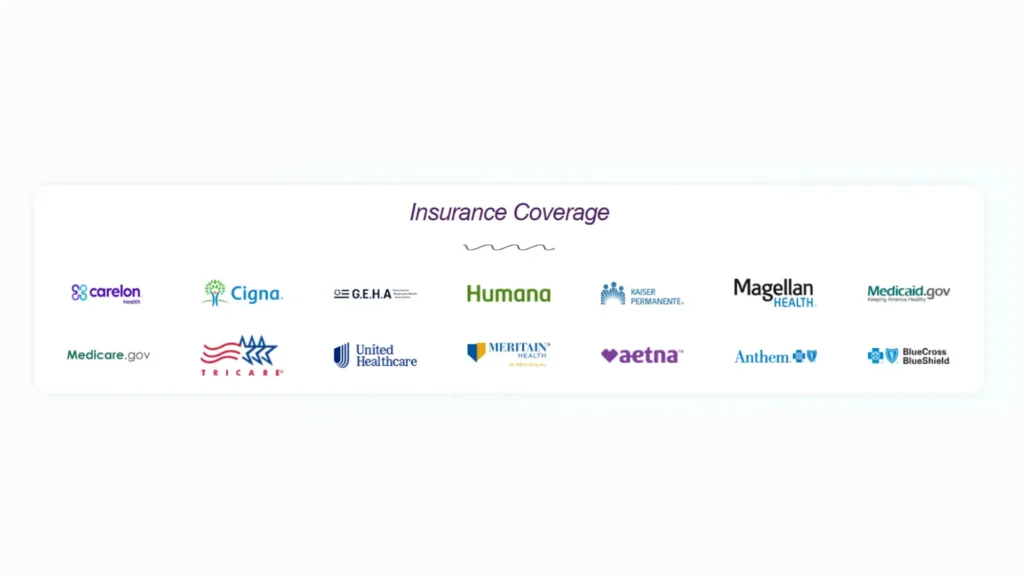
For depression and OCD, TMS coverage is common with many insurers and with Medicare. When anxiety is the main diagnosis without depression, coverage rules differ by plan. Our staff can help you check benefits and discuss a path that fits your budget. Recent industry reports note growth in TMS coverage and more flexible approvals for anxious depression with certain FDA cleared systems. (Psychiatric Times)
Your next step in Atlanta or Decatur
If you want a non drug option for anxiety, TMS for Anxiety may be a good path. You can learn about the technology on our About NeuroStar TMS page. If you want a walk through of your first visit, see our What to Expect page. If you are ready to see if you are a candidate, explore our TMS Therapy for Anxiety page and request an appointment. We serve Atlanta, Decatur, and nearby communities with patient centered care.
Key takeaways you can trust
TMS is a clinic based, noninvasive therapy that uses magnetic pulses to calm overactive worry circuits. Federal sources explain that it targets specific brain areas and does not require anesthesia. TMS has strong approvals for depression and OCD and device specific clearances for anxious depression. For primary anxiety, high quality studies now show real symptom relief for many people, with ongoing research to refine the best dose and target. If you have tried therapy and medicine without enough progress, you may be a good fit. A consult can confirm safety, expected benefits, and coverage details for your situation in Georgia. (National Institute of Mental Health)
Helpful sources to read next
Learn about how TMS works from the National Institute of Mental Health. See Mayo Clinic for a practical overview of session length and side effects. These pages are clear and reliable and they match what you will experience in our clinic. (National Institute of Mental Health)
Why choose Atlanta Spravato and TMS Center
We combine NeuroStar technology with a caring team and a simple plan. You get a clear start date, a welcoming treatment room, and steady support from day one. You are never a number here. You will know your team by name and feel heard at every visit. If you are ready to explore TMS for Anxiety in Atlanta or Decatur, we would be honored to help you take the next step.